
Today, social media is a a very crucial element of a small business’s online marketing strategy. The right use of multiple social media channels can help your business to build brand awareness, increase your customer base, and connect with current customers.
But success doesn’t come easy, especially when we’re talking about establishing a strong online presence. So read on and take note, because we’ve got a list of 10 top social media mistakes to leave behind in 2020.
Some common mistakes that businesses make on their Social Media Channels (and you might be making too!)
1. Posting a plethora of announcements about offers: Social media channels are for engaging, communicating, listening to your customers and sharing meaningful content with them; it’s not just for dumping short-term discounts on their feeds. Sure, such techniques are a good way to attract new and existing price-sensitive buyers but when you only post the same promotional messages on all your social media channels regarding a 20% off online sale for 10 days straight, it gets very monotonous and boring for your followers and customers; subsequently, your engagement rate takes a hit because people are less interested in reading the same thing over and over again.
You are responsible for everything you post and everything you post will be a reflection of you.
Germany Kent, American broadcaster and social media etiquette expert
2. Uploading poor quality pictures or videos downloaded from random sources on the web: There are a lot of small businesses that don’t invest in a quality content production and graphics team, download and share images or video from unreliable websites, or blatantly copy creative ideas posted by other related big companies usually face a lot of criticism for taking the easy way out of the content creation process and being perceived as lazy unoriginal brands.
3. Ignoring customers’ comments about certain queries and complaints: Conversations on social media channels should largely be two-way interactions. That means, when a brand makes a post, its job doesn’t end there. To make customers feel like they are a valued part of the brand’s growing online community, it must respond to them within a reasonable timeframe. However, I have witnessed quite a lot of small (and established!) brands who don’t address their customers’ online requests or questions when they comment on their posts on Facebook or send them a direct message on one of the channels. Moreover, some brands also delete negative feedback posted by angry customers on their social media pages instead of redressing them timely. This impacts their image to a large extent. Don’t make your social media page all about your company. Include your customers and make it about them!

4. Incorrect or incomplete contact information: Many businesses that have just started with a social media presence either forget to put in their accurate contact information or input incomplete details. And sometimes the brand may be available on social media but the owner or the customer service representative is not available offline for the prospective customers when they contact them. For instance, your Facebook “About” section projects the image your brand has online as it consists of a lot of information like a category, the official name, username, business info, as well as additional information such as email, website, etc. Now if these details vary for the SAME business on different social media pages, it may create an impression of unreliability and confusion in the followers’ minds.
5. Treating all social media platforms the same: I see a lot of inexperienced businesses making the blunder of addressing audience on different social media platforms in a way which doesn’t resonate with the traditions of the said platform. Every social network has its own customs, language and type of content to be posted. For example, you shouldn’t post a lot of information-laden infographics on Instagram as opposed to publishing them on LinkedIn just like you shouldn’t upload informal product endorsement videos every other day on a professional networking platform like LinkedIn in comparison to posting them on Instagram. Matching your content to the platform it’s on will help your brand to relate to its target audience better and drive more conversions, therefore, enabling you to achieve your social media marketing objectives.
Social media creates kinship between companies and customers, and kinship equals purchase intent.
Jay Baer, Hall of Fame keynote speaker and emcee
6. The race to gain followers: These days, many small brands resort to illegally purchasing fake followers on platforms like Instagram to appear popular. Buying followers on Instagram, Twitter, Facebook, or subscribers on YouTube is simple, quick and cheap today and a number of companies offer such services, However, it is a huge mistake on the part of the business owners to think that this will be beneficial in the long-run. Having thousands of random followers who don’t even believe in the ideals of the brand will never contribute to long-lasting customer relationships and meaningful discussions online and will get the business nowhere. Another issue is when small brands use metrics like follower count or number of likes to identify popular influencers to endorse their products. Again, these numbers may be inflated by certain agencies who sell fake followers on social media who aren’t even actual people. Therefore, when such an influencer promotes the brand’s products on their account, very few *real* followers actually see it.

7. Not getting a “Regram” approval: Imagine you’re a small cafe owner and you see a super cool picture uploaded by one of your customers with their friends on Instagram along with a caption praising your menu selection. Positive WOM about your product always sounds great, doesn’t it? So now you quickly decide to repost their picture and caption on your official Instagram handle for all of your followers to see too. All’s good, you say? Well, not really. You see, not asking the owner of the picture for a Regram permission is a violation of their intellectual property rights! The correct way to do this would be to ask your customer if you could upload their picture and if they agree, repost it while giving due credits to the original user by tagging them and even mentioning their name.
8. Heavily relying on automation: While chatbots are a good way to engage with information-seeking customers, save time, and take the burden of hundreds of queries off a customer support team, relying too much on chatbots to assist customers is not desirable because chatbots are bound to make errors while dealing with them even for the simplest of things.
Related: Chatbot Customer Experience Fails And How To Avoid Them https://www.coredna.com/blogs/chatbot-fail
Check out a couple of hilarious chatbot fails here: https://www.businessnewsdaily.com/10450-funniest-chatbot-fails.html
Most social media users usually like to engage with actual human beings on online channels to feel connected and heard. Just because users know that they are typing text messages to a bot, doesn’t mean that they should feel like they are chatting with one too Because of this, the whole exchange may feel impersonal and it might push them away from your brand. As for posts, if you spam them with too much irrelevant automated content, you will start losing them in extreme cases. And that is not a very good idea for a small business that is just starting out with its online presence. Instead, try to add a personal touch to as many of the conversations as you can to make them look like the updates came from a real, live person. Do make your content delightful, interactive and authentic.
9. Paid influencer marketing posts are not recognised as such: Suppose you find an influencer and pay them to blog about your products or post an image of themselves and your products on their Instagram. Although this is a great way of driving their followers to your account or website and increase your reach, not being upfront with these users by NOT using a hashtag like “#ad” or mentioning “Paid Partnership” on the post or article may seem misleading to many. A lot of social media users today rely on influencers to make buying decisions because of their credible neutral reviews. Moreover, savvy consumers value the perceived transparency and authenticity of influencers and brands who volunteer a disclose.
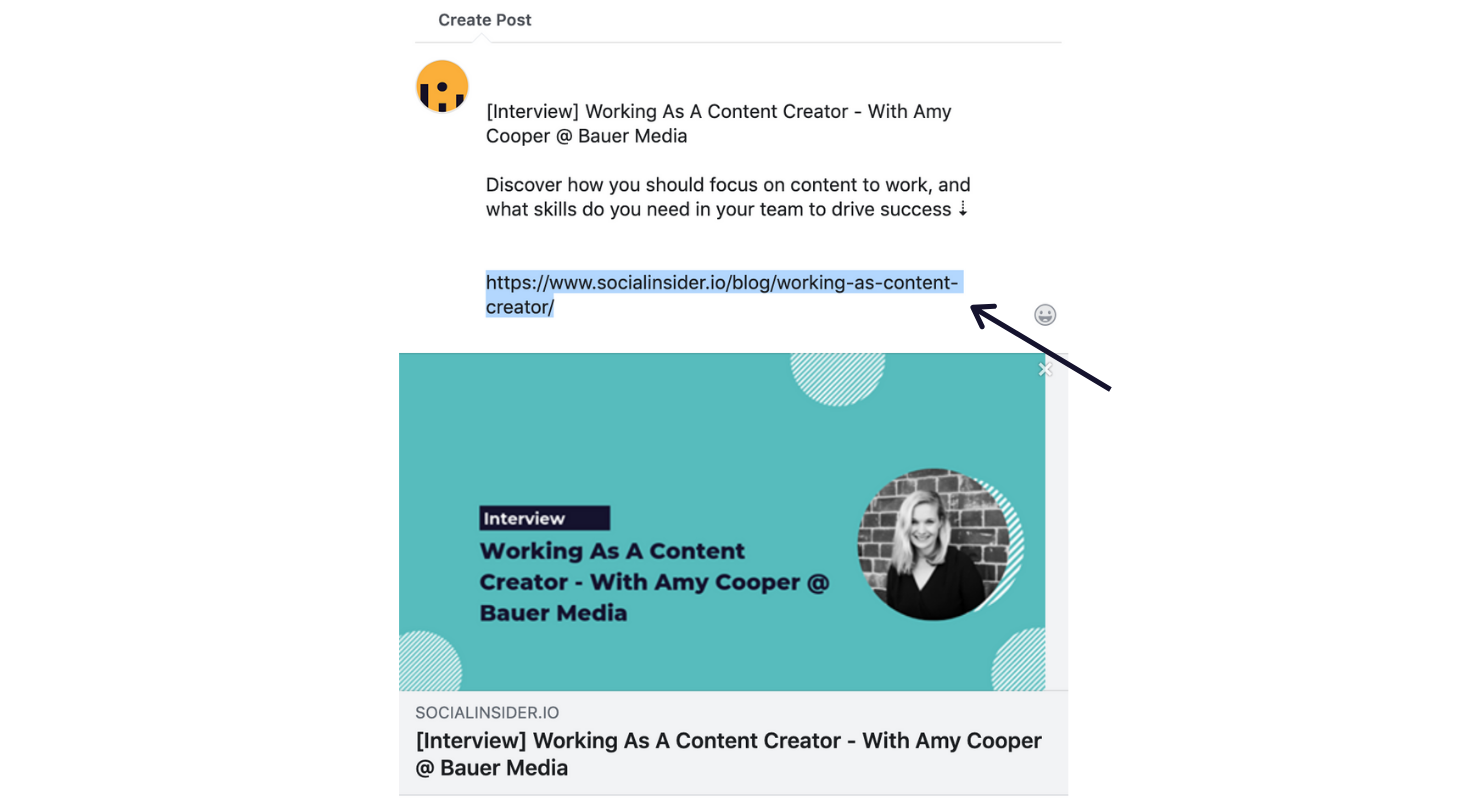
10. Forgetting to remove the URL from a post: Did you know that while adding a URL in a post, Facebook automatically creates a clickable image for you which works as a link to the webpage when clicked? Surprising, right? You can, therefore, safely delete the URL code from your text area to make the post look cleaner and crisper.
Social media can work wonders for growing your business or it can destroy your social media marketing strategy in mere hours. Thus, make sure that your entrepreneurial brainchild steers clear from committing the above mistakes and uses social media as a valuable and profitable element of its online strategy.
Before you go, don’t forget to check out 10 of the Biggest Marketing Fails of All Time: https://www.bluleadz.com/blog/10-of-the-biggest-marketing-fails-of-2017
Also read some awesome benefits of social media for business here: https://blog.hootsuite.com/social-media-for-business/
 BUILD A BUSINESS